Why Here, Why Now?
- Raven Ambrose
- Dec 18
- 18 min read
Updated: 4 days ago

***********************
Hey everyone! It's been a bit since my last post, and I hope you're all doing great. Just wanted to let you know I'm still here and kicking! In case you missed it, I just got back from an amazing two-week trip around Europe with my husband and three of our four kids. It was a crazy adventure packed with unforgettable moments, and I'm working on putting together some detailed blog posts about it all. It's taking a while because there was so much going on, and I want to make sure I capture every awesome detail. So, hang tight as I get ready to share more about our epic trip soon. We got to visit some beautiful countries like The Netherlands, where the canals blew us away. Then we hit up Paris, France, and soaked up the culture, the food, and of course, checked out the Eiffel Tower and the Louvre. Next, we headed to Austria and were wowed by the stunning landscapes and charming cities like Innsbruck. We also made a quick stop in Germany, though we only had one night in Munich. We drove from France to Austria, and on our last night, we stayed at a hotel near the airport for our early flight. We even hit up McDonald's in The Netherlands, France, Germany, and Austria. Honestly, I think they're all a bit different. Some things are the same, but not everything. I actually prefer the McDonald's over there; I can eat it without feeling sick. My son and I spent the night playing Donkey Kong.
In addition to these awesome spots, we had a quick but sweet stop in Brussels, Belgium. During our layover, we couldn't resist grabbing some world-famous Belgian chocolate from a shop right in the train station. The flavors were amazing, and we definitely wanted more. Sadly, we were on a tight schedule and didn't have time to explore the city further, which was a bit of a bummer. I would've loved to wander around Brussels, take in the local culture, and try more delicious treats. As I keep gathering my thoughts and experiences, I'm excited to share more detailed stories from our trip, including tips for traveling with kids and highlights from each place we visited. Stay tuned for more updates, and I'll take you along on our European adventure soon!
***********************
Oh, This Awful Food!

***********************
So, what's this post about if I'm not diving into the trip details? Here's the scoop: one of the things I miss most from my time over there is definitely the food. For someone like me, who usually has a tough time with most American food, it was amazing to enjoy a variety of dishes without constantly worrying about feeling sick afterward. The food experience was freeing; I could eat meals with gluten and, surprisingly, not feel terrible. It was such a refreshing change. I clearly remember having a McDonald's double cheeseburger in Paris—sounds basic, right? But the experience was anything but. To my surprise, I felt totally fine afterward, which is a big deal compared to what usually happens back home. In America, even a tiny bit of gluten can mess me up, leaving me uncomfortable for days. My stomach blows up like a balloon, with sharp pains that make it hard to focus on anything else. This misery can last 2-3 days, depending on how much I accidentally eat, and it's just awful. Coming back to America after such food freedom is really sad. It's a bummer to have limited options and often end up with the not-so-great food available here. Even when I try to pick "healthy" options, they just don't compare to the tasty meals I had in Europe. The difference is huge and disappointing. The vibrant flavors, fresh ingredients, and rich culinary traditions in European food are unbeatable. Every meal was an adventure, a fun exploration of tastes and textures that just doesn't exist the same way back home. In Europe, dining isn't just about eating; it's an experience to enjoy. The vibe, the presentation, and the quality of ingredients all make for a complete enjoyment of food that I find missing in American dining. I miss the days when I could enjoy every bite without worrying about a bad reaction. Those meal memories stick with me, reminding me of what I can't take for granted anymore. The joy of eating freely is something I deeply miss, highlighting just how much food culture differs across the Atlantic.
***********************
Why Here?

***********************
You ever find yourself thinking about why you were born where you were? I do it all the time, wondering why I ended up in the state I did. The place and culture I grew up in really get me thinking. Why did I land in a family that doesn't have the closeness and love I've always wanted? I've always dreamed of having a big, lively family that’s super tight-knit, where everyone has each other's backs no matter what. A family filled with love and laughter, where the bonds are so strong that nothing could break them. I picture a family that stands together through tough times, offering support and encouragement when things get rough.
When I'm alone, I often think about how different my life might have been if I’d been born in Europe instead. The culture and family life there seem to offer a different kind of support and community. I imagine the beautiful landscapes, the historical vibes, and the traditions that are a big part of many European families. When I talk to others about this, I usually hear things like, "It could be worse," or "There are way worse places than America." Sure, there are places with bigger problems, but I also think there are places that might offer more fulfilling experiences and nurturing environments. This mix of better and worse situations keeps me thinking. I wonder how my life would be if I’d grown up somewhere else, with a family that had the love and support I crave. The difference between what I have and what I want makes me long for deeper connections. I'm trying to build my own version of family, one that’s full of the love and loyalty I’ve always wanted. As I go through this journey, I keep exploring how family dynamics shape us and who we want to be.
***********************

***********************
I often catch myself wondering why I ended up being born in this particular era. Being born in 1986 puts me at a cool crossroads of history and tech. By the time I showed up, technology was already a big deal, but nothing like the super advanced stuff we have now. Back then, we made do with what we had, and there was a real appreciation for the simple joys that kids today might overlook. This kind of thing happens with every generation. If you know me, you know I’m a history buff, which is why I often daydream about living in other times. Sometimes, I imagine being part of ancient Egypt, watching the pyramids go up and being part of one of the world's first big civilizations. Or I picture myself as a fancy debutante in the English ton era, hitting up grand balls and experiencing high society. I also romanticize being a free-spirited gypsy or a hippie in the colorful 1960s, a time full of cultural revolutions and a quest for peace and love.
But I’m not saying those times were all sunshine and rainbows or better than now. Every era has its own challenges that shaped human life. Today, we’re seeing crazy fast tech growth, which is awesome but also brings a bunch of new problems. Sure, technology has perks; it’s changed how we communicate and get info. But I genuinely think the downsides often outweigh the upsides. In my 39 years, I’ve watched tech evolve at lightning speed and change our society in some pretty wild ways. It’s not just how we interact; it’s reshaping our social dynamics in ways that can be kind of scary. Sometimes, I wonder what it would be like to be a teenager today. I know for sure I’d hate it. Bullying has always been around, but tech has taken it to a whole new level. Cyberbullying lets people harass others from behind a screen, often with terrible consequences. The anonymity of the internet means people can act out without facing the music like they would in person. Despite these worries, I really appreciate modern conveniences like running water, hot showers, and indoor plumbing. These are luxuries that make life way better and are often overlooked.
I think back to when my 13-year-old son and I played Super Nintendo's Donkey Kong during a hotel stay in Germany. He was blown away by the graphics and simplicity, amazed at how far tech has come in such a short time. But even with all the advances, we had a blast with that straightforward game, which took us back to a time when fun didn’t depend on complex graphics. It feels like everything today is overly complicated and sometimes overwhelming. The fast-paced life, driven by tech, can make us feel disconnected and unsatisfied. These reflections remind me of the need for balance—enjoying modern life’s perks while also valuing the simplicity and real connections of the past. It’s a tricky balance between loving the present and longing for the past, and through this reflection, I keep searching for a deeper understanding of my place in this ever-changing world.
***********************
What I do love about these times

***********************
The World Wide Web
I really love having the internet, especially when it's used for good stuff. It's such a powerful tool that lets us quickly and easily reach out to people who are far away, making distances that used to feel impossible to cross totally manageable. Whether it's a quick text, a video chat, or an email, being able to instantly connect with friends and family all over the world helps us stay close and keep our relationships strong. It's an awesome way to spread love and kindness, letting us share moments, offer support, and keep bonds alive even when we're not physically together. Plus, having so much information right at our fingertips is amazing. The internet is like a giant library, and for someone like me who loves learning, it's super valuable. I can dive into all sorts of topics, from history and science to art and culture, with just a few clicks. This easy access to information makes learning not only faster but also way more fun, as I can follow my interests and satisfy my curiosity in ways that just weren't possible before the digital age.
Modern conveniences
I just love how we don’t have to spend our whole lives just getting by like people did back in the day. Without all the tech we have now, simple tasks would take forever and be way harder. For example, traveling used to mean long walks or bumpy rides in a horse-drawn carriage. Cooking took hours over an open flame, and cleaning was a huge hassle without modern appliances. Today’s inventions like washing machines, microwaves, and cars make life so much easier, freeing us from boring chores so we can do more fun and meaningful things. These conveniences not only make our daily routine smoother but also let us enjoy life more by giving us the time and energy to do what we love.
Speaking of which, I really appreciate having a modern bathroom. It’s crazy to think about how new this concept is in human history. For ages, people got by without private, well-equipped bathrooms, often using communal setups or even more basic solutions. The journey from outhouses to the cozy bathrooms we know today shows how far we’ve come in terms of hygiene and comfort. I’m really grateful for all these modern conveniences; they’ve changed our lives in ways we couldn’t have imagined.
Electricity is another thing I’m super thankful for and all the ease it brings. Just the other day, I was chatting with my twins about this. During our trip to Europe, they were surprised to see many people still using wood fires to heat their homes instead of modern heating systems. This got us talking about what that means. My 13-year-old daughter, who’s pretty sharp and health-conscious, was worried about the smoke and its impact on our lungs. I reminded her that using fire for cooking and warmth has been a part of human life forever. Fire helped our ancestors cook food, stay warm, and even kept them safe from predators. It was also a social hub where people shared stories and knowledge. I pointed out that electricity, as we know it, is a pretty new thing in the grand scheme of things. It’s changed how we live, work, and connect. Electric heating means we can stay warm without the smoke, and electricity powers everything from our lights to our gadgets, letting us connect with the world in ways our ancestors couldn’t imagine. I encouraged my kids to appreciate all these advancements we often overlook. While there’s a certain charm to wood fires, it’s important to recognize our progress and the need for sustainable energy in the future. This chat not only gave them a deeper understanding of history but also made them grateful for the modern conveniences electricity offers, helping us live healthier, more efficient lives.
Freedom of Religion
I really appreciate living in a time and place where I can choose science over religion. It's great to have the freedom to explore the world through evidence and reason. Being able to believe what I want without facing persecution is a big deal, especially since many people around the world still can't do that. This freedom creates a space where different ideas can mix, leading to better understanding and innovation. I'm thankful I wasn't born into a society that forces people to stick to the community's beliefs. For example, someone from an Amish community, where life is simple and tech-free with strong religious ties, might find it tough to see things differently. The same goes for those in Muslim families, where religion is a big part of life, or in North Korea, where there's only one accepted way to think. Even in Jewish communities, where traditions are passed down, there can be pressure to follow religious practices. I respect these communities and their beliefs (except maybe the leadership in North Korea, which is another story), and I admire the faith and traditions that shape them.
But I'm really grateful for the freedom to choose my beliefs, explore different ideas, and make up my own mind. My mom isn't religious, even though she grew up in a Catholic family and went to Catholic school. Her background has definitely shaped how she sees faith, making her open-minded about spirituality. My mom's grandparents were all from Italy, a country with deep Catholic roots. When my Nana was still around and sharp, we had a lively debate about faith and identity. She was pretty old-fashioned, holding onto beliefs from another time, even though she wasn't strictly Catholic. Her thinking was similar to many people who mix cultural identity with religion. When I told her I wasn't Catholic or religious, she was surprised and insisted I was Catholic just because our family is from Italy, where Catholicism is a big part of the culture. I tried to explain that religion is a personal choice, not something decided by family or culture. But she struggled to see it that way because her views were so tied to the idea that family heritage equals religious identity. This experience showed me how complex belief systems can be, shaped by society, family, and culture.
***********************
What I do NOT like about these times

***********************
Negatives of Technology
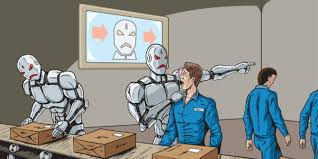
I’m really not a fan of how technology has taken over our lives so completely. Instead of seeing friendly faces and warm smiles in stores, we're often greeted by cold machines and robots that just don’t have that human touch. This change not only cuts down on the personal interactions that used to make shopping enjoyable, but it also affects jobs. As automation and AI become more common, a lot of people are losing jobs they thought were safe, which causes economic problems for families and communities. Things get especially tricky when the tech we rely on suddenly fails. A few months ago, I had a moment that really highlighted this issue. I was at a local grocery store with a cart full of food for a camping trip with my family. When I got to the checkout, I found out their system was down and they were only taking cash. I was shocked because I almost never carry cash, and in today’s digital world, especially in America, it’s not the norm. Many places have gone cashless, which made this even more frustrating. I felt crushed because I had spent hours picking out everything I needed, and now it seemed like all that effort was wasted. I didn’t have time to go to another store and start over. Luckily, one of the employees showed some rare kindness by letting me use Venmo to pay her, so she could complete the transaction when the system was back up. Without her generosity, I would have left empty-handed and defeated.
I also can’t stand how easy it is to spread hate and lies online, and it’s upsetting to see how quickly people believe this misinformation. The sad part is, there’s so much real, credible information out there if people would just take the time to look for it. But instead, they often see sensational headlines or misleading stories and take them as fact without checking. This has created a situation where, when I go on social media, I’m left unsure if what I’m seeing is real or fake. Many people, including myself, try to share real content and engage meaningfully with others, but it’s getting harder to compete with the draw of more exciting but fake stories. The pressure to fit a certain narrative or look to get attention and reach more people is huge. But I refuse to give up my authenticity just for a brief moment of fame; doing so would go against everything I believe in.
I’m really worried about what all this technology is doing to our bodies and minds. Kids, especially, are spending so much time on screens while they’re still growing, and it’s causing all sorts of health issues that could last a long time. Letting kids stare at screens for hours can mess with their eyesight, brain development, posture, and overall health. The imaginative play that used to be a big part of childhood is being replaced by passive screen time. I remember playing with Barbies until I was 13, building complex houses and fantasy worlds from my imagination. This kind of creative play is missing in today’s kids, who often rely on AI to create stories and experiences for them. The ability to think critically and creatively is getting stifled, as kids aren’t encouraged to use their imaginations like we did. Instead of exploring their creativity, they depend more on technology for entertainment, which is hurting their imaginative thinking and problem-solving skills.
Modern Medicine
I really do appreciate modern medicine, but only to a certain point. There's no denying that today's medical practices have seriously boosted our quality of life. Take antibiotics, for example—they've completely changed how we deal with bacterial infections, saving tons of lives when used correctly. It's pretty amazing what science has achieved in fighting off infections so quickly and efficiently. But, my enthusiasm for modern medicine is mixed with worries about relying too much on chemical prescriptions. Sure, these meds can ease symptoms and provide relief, but they often come with some nasty side effects that might even make the original problem worse. This makes me wonder: How did people manage to survive and thrive throughout history without all these modern meds? How did they not just fall to diseases and injuries without advanced medical help? The answer is in the natural remedies our ancestors used, tapping into the healing powers of plants, herbs, and other natural elements. These natural treatments usually have fewer side effects and offer a more holistic approach to health, which many folks see as a healthier alternative to synthetic drugs. Sadly, these days, there's a lot of skepticism about holistic and natural remedies, mainly because the medical world focuses so much on pharmaceuticals. Many people just brush off natural treatments as being less effective or even irrelevant, which is a real shame. I can vouch for the benefits of essential oils myself—they've helped me heal and find relief in ways that modern meds haven't. The healing properties of these natural substances have worked wonders for various issues, making me a firm believer that natural is the way to go.
The quality of food in America is a big reason for health problems. Our food is loaded with chemicals, preservatives, and artificial stuff that mess with its nutritional value. This is a stark contrast to many other countries, especially in Europe, where they have stricter rules about what can go into food and medications. When I visited a pharmacy in Europe, I was amazed at how few medications they had compared to an American pharmacy. Even the over-the-counter stuff seemed to be of higher quality, showing a commitment to health that favors natural ingredients and effectiveness over just having a ton of options and making a profit. In the end, while I see the progress modern medicine has made, I strongly believe we shouldn't ignore the wisdom of natural healing practices. A balanced approach that combines modern and holistic methods could really improve health outcomes for everyone. We need to rethink our relationship with both food and medicine and push for a return to more natural, healthier choices that respect our bodies and the environment.
***********************
What I do appreciate about where I am from (America)

***********************
I'm really grateful for the amazing freedom in America compared to a lot of other places, especially those with stricter governments like North Korea, China, and Russia. The U.S. offers freedoms like speech, assembly, and expression without having to worry about government backlash—things that people in many countries can only dream about. This kind of freedom sparks creativity, innovation, and a lively culture full of diverse ideas. I also love all the conveniences here, from cutting-edge tech and infrastructure to a wide range of services that make everyday life easier. Access to information, goods, and services boosts quality of life and lets people chase their passions without too many hurdles.
There's still so much beauty in America that I haven't seen yet, and that really excites me. Every state has its own unique landscapes, cultures, and histories, adding to the country's rich tapestry. From the stunning national parks like the Grand Canyon and Yellowstone to the vibrant city life in places like Chicago and San Francisco, there's a ton to explore. I haven't been to all fifty states yet—I'm over halfway there—but I'm determined to visit each one eventually. Every trip promises new adventures, chances to meet different communities, and opportunities to learn more about the diverse American experience.
Plus, I love that I can understand most people in America, which makes me feel connected and at home. Sharing a common language makes communication easier and interactions deeper, letting me engage with others and share experiences without the hassle of a language barrier. Traveling to a country where I don't speak the language can make things tricky, whether it's ordering food, asking for directions, or just trying to chat with locals. Having a shared language here not only simplifies daily life but also helps me dive into the culture, join discussions, and make friends. All in all, the mix of freedom, convenience, beauty, and language familiarity makes America a fantastic place to explore and enjoy.
***********************
What I hate about where I am from

***********************
The Government
People often say America is a democracy, where everyone gets a say in how things are run. But honestly, I don't quite see it that way. It feels more like a kind of dictatorship where a few people call the shots, drowning out the majority. This isn't just a random thought—it's based on watching how politics and society work here.
What I really like about Europe is how small the countries are. In these smaller places, governments seem to get things done more efficiently. It's simple: with fewer people to manage, they can focus better on what their citizens need. This is a stark contrast to the massive size of America, which stretches across a continent with all sorts of cultures, languages, and needs. The sheer scale of the U.S. makes it tough for one big government to handle all the regional issues effectively.
Take the Netherlands, for example. It's about the size of West Virginia or Maryland. If you know your geography, you can see just how tiny the Netherlands is compared to many U.S. states. This compact size lets their governments connect better with their people. I genuinely think if each U.S. state could act like its own little country, we'd see better governance and happier people. States could make rules that fit their residents' specific needs, leading to more relevant decisions.
Also, think about the economic side of things in America. How many other countries have had their financial systems completely shut down, making people work without pay for long periods? This kind of scenario is almost unheard of elsewhere. Yet in America, workers went over a month without paychecks and felt they had to keep working out of fear of losing their jobs when the government finally got its act together. It's not just frustrating; it's downright worrying.
The gap between regular folks and those in power is glaring. While government officials enjoy hefty salaries and perks, countless people are struggling to get by. This paints a pretty bleak picture of a country that's supposed to be all about opportunity and equality. In reality, many of the "little guys" are left to fend for themselves, dealing with financial uncertainty while those at the top stay cushioned from everyday struggles.
To wrap it up, the idea of America as a model democracy is being questioned by the real-life experiences of its citizens. The inefficiencies due to its vast size, coupled with stark economic inequalities, suggest it's time to rethink how things are run. Letting states have more independence might just help create a system that truly embodies the democratic ideals America was built on.
Education System
One thing that really bugs me about this country compared to others is the education system. It just seems to be missing the mark in some key areas. This is one of the big reasons I've decided to homeschool my daughter—I think it gives her a richer and more complete learning experience. For a nation that prides itself on being the “melting pot” of the world, the U.S. often drops the ball when it comes to truly embracing and accommodating different cultures and languages.
Take language learning, for example. In many countries, kids start learning multiple languages when they're really young, which boosts their brainpower and helps them understand different cultures better. A friend of mine in The Netherlands told me their schools start teaching kids multiple languages as early as four years old. This early start means kids can speak more than one language fluently, and it's common to find people in other countries who can chat in several languages. Here in the U.S., though, it's kind of rare to find people who even speak English well, which is funny since it's our main language. This language barrier can really get in the way of communication and cultural exchange, which are super important in our global world.
I also really like how some countries have a year-round school calendar. The long summer break in the U.S. often means kids forget a lot of what they've learned because they're out of school for months. By the end of summer, kids are usually bored and restless, with not much to keep their minds busy. For parents, this long break is tough because they still have to work and figure out childcare, which can be expensive.
Switching to a more balanced school calendar with shorter, more frequent breaks could help fix these problems. It would keep kids engaged and help them remember what they've learned better. Plus, the current U.S. education system seems to be more about politics than focusing on what kids really need. This shift away from prioritizing good education and student well-being is really worrying and seems to miss the point of what education should be about.
In the end, the U.S. education system has a lot of room to grow. By taking inspiration from other countries—especially in areas like language learning, school structure, and keeping politics out of education—we could build a better learning environment that really prepares kids for today's world. It's a shame to see such potential wasted, especially when our kids' futures are on the line.


Comments